AI Tools We Actually Use (August 2025 Edition): Vibe Marketing

Archie Norman
Welcome back to our monthly series, spotlighting the AI tools we're actually using daily at mmtm, not just the ones we’ve tested and forgotten about.
This time, we're talking marketing...
At mmtm, our marketing resources are lean and focused, so every hour has to count. That’s why we’ve built an AI-powered workflow to handle the time sinks.
And no, we’re not talking about getting ChatGPT to write generic blog posts for us. Just letting it power through the repetitive, time-intensive parts of SEO, content planning, and performance analysis.
We call it our vibe marketing system: a set of tailored prompts and automations that cut through the grunt work and free up hours each week for the activities that really matter.
What Is Vibe Marketing?
Similar to ‘vibe coding’ that’s been exploding in popularity, ‘vibe marketing’ is - at its core - the use of AI to speed up marketing workflows.
Here’s what it does best:
- Speeds up research by scanning your website and identifying high-impact opportunities
- Makes sense of data by pulling insights from tools like Ahrefs and Google Search Console (without the spreadsheet headache 😵💫)
- Handles the repetitive stuff by putting together internal marketing review agendas, tabulating performance data, etc.
AI isn’t used here to replace the creativity element - it’s here to clear space for it.
How We Use It
Here at mmtm, we use AI to turbocharge our SEO and content workflows - not to write for us, but to help us write better, and plan smarter.
Here’s a peek under the hood at our workflow. It’s a series of ChatGPT prompts we’ve tested and iterated on that:
- Crawl & clarify: it crawls our website and builds a working snapshot of our voice, services, and structure.
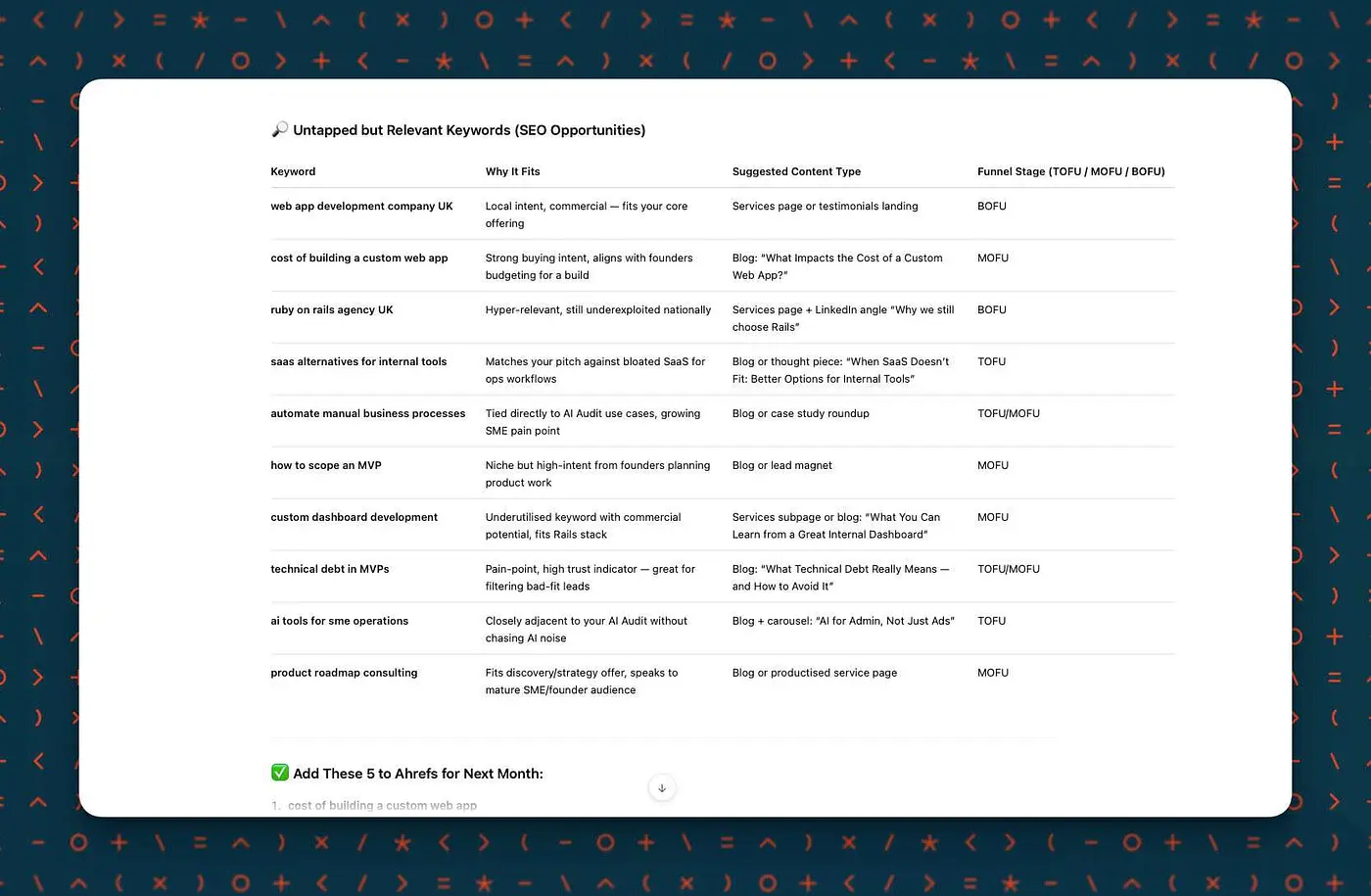
- Keyword insight: it crunches our Google Search Console + organic keyword data to pick out quick wins and long-tail gems to target.
- Content strategy mapping: based on those insights, it outlines blog angles, structure ideas, and even opportunities to repurpose or expand on existing content.
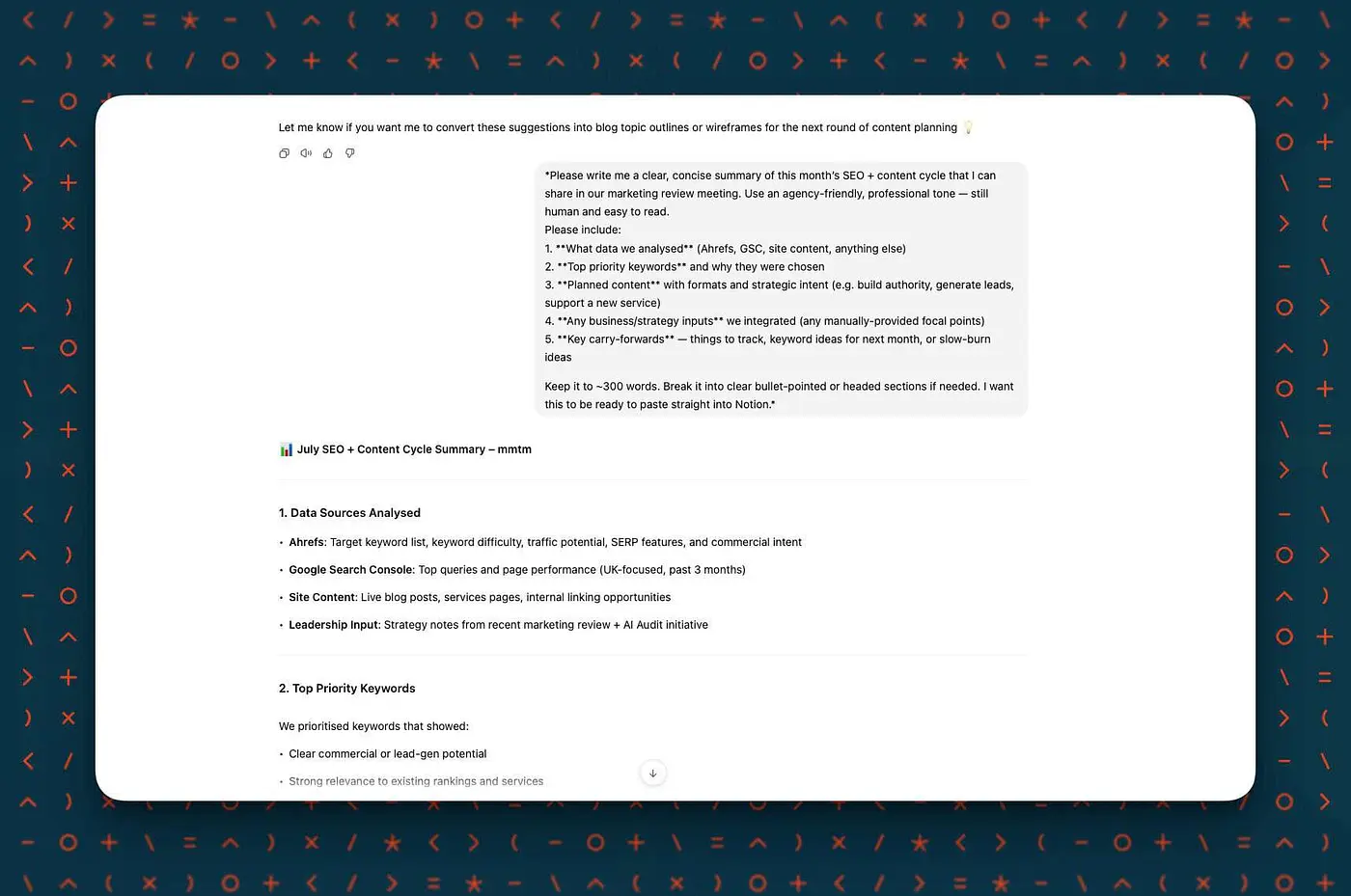
- Prompt engineering: we fine-tune what we feed in so that what comes out matches our tone, priorities, and outcomes of our monthly marketing snapshot meetings.
It’s fast. It’s flexible. And it keeps our content engine running without burning through human-hours on busywork.
How It’s Benefitting Us
Before implementing our vibe marketing workflow, we simply didn’t have the time to manually comb all of our analytics, keywords, and Google Search Console stats each month to be able to make performance-driven marketing strategy calls - let alone actually plan and execute them!
Since we’ve embedded this in our marketing playbook, however, we:
- Save ~2 hours per week (or more when we’re pulling together end-of-month reports!) by cutting out manual data analysis alone
- Have confidence in our SEO plan, our voice, and our angle when writing content
- Are freed up to poke our heads up above the weeds and make more macro strategy decisions
- Are launching new services and products (👀) which we wouldn’t have had the time and oversight to do before
And - not to brag - but in our latest monthly marketing snapshot we reported a whole lot of green in our Google Analytics (including +40.1% organic search traffic to our site 💁♂️).
We really can’t reiterate this enough when it comes to AI: the real value isn’t just in saving time - it’s in reallocating that time to higher-impact thinking.

Martin Dick
Co-Founder, mmtm
Not sure which AI tools are worth using?
We’ve used AI in our own marketing, reporting and internal processes, and we also help clients identify where tools, automations or integrations could reduce repetitive work.
If you’re not sure where AI fits into your business yet, I’d be happy to talk through your workflows and help you spot the areas most likely to be worth exploring!
Book an AI AuditFrequently Asked Questions
Can AI help with SEO?
Yes! AI can be very useful for SEO research, keyword analysis, content gap spotting, performance summaries and turning Search Console data into clearer next steps. The writing, judgement and positioning still need human input, but AI can remove a lot of the spreadsheet-heavy preparation work.
What marketing tasks are best suited to AI automation?
Tasks that are repetitive, data-heavy or time-consuming but still need human review. Good examples include SEO optimisation, content planning, meeting summaries, competitor research and turning analytics into monthly action points. Creative direction and final decisions should usually stay in human hands.
How do you stop AI-generated marketing work sounding generic?
The best way is to give the AI strong context. That means sharing your tone of voice, audience, services, examples of existing content and the business outcome you're aiming for. Even then, a person should review the work before anything goes live.
Not Sure What To Read Next? Here’s What We Recommend...
- AI
- Productivity
- Business Development
- Office Life